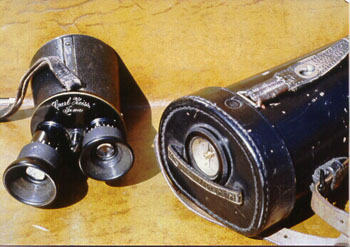
 The
famous Zeiss scientist and manager, Ernst Abbe created the first commercially
successful prism binocular 1894. The design was soon copied or near copied
by almost every optical company across the world. This is a sample of
an improvement of that design in monocular form. It is known as the rotating
Marineglas with 5x and 10 eyepieces. These were an 1896 design and are
exceeding rare to day in both binocular and monocular form.
The
famous Zeiss scientist and manager, Ernst Abbe created the first commercially
successful prism binocular 1894. The design was soon copied or near copied
by almost every optical company across the world. This is a sample of
an improvement of that design in monocular form. It is known as the rotating
Marineglas with 5x and 10 eyepieces. These were an 1896 design and are
exceeding rare to day in both binocular and monocular form.
Monoculars were made of each variant of the early binoculars which were typically marked with the name "Feldstecher" and the size of the magnification. The earliest were 4x, 6x and 8x. Soon after, this revolver and individual 5x and 10 sizes along with 7.5x and 12 x. These were all marked with a raised silver soder script rendering of the firms name. After 1904/5, the famous lens cell logo came into almost universal use at Zeiss.
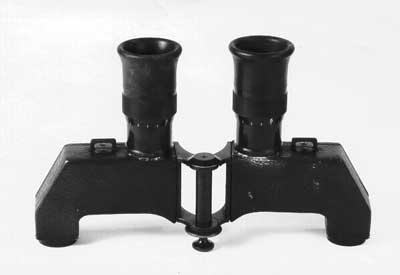 About
1905, Zeiss began to use roof prisms in their binoculars. Such prisms
were pioneered by the firm of Hensoldt in Wetzlar which became a part
of the Zeiss family of companies at a later time. This picture shows a
3x binocular with the trademark of Teleplast. This trademark was also
used for another contemporary 5x roof prism binocular and for the famous
Scherenfernrohr trench binoculars. These are among the rarest of all Zeiss
binoculars since they were made for a very short time.
About
1905, Zeiss began to use roof prisms in their binoculars. Such prisms
were pioneered by the firm of Hensoldt in Wetzlar which became a part
of the Zeiss family of companies at a later time. This picture shows a
3x binocular with the trademark of Teleplast. This trademark was also
used for another contemporary 5x roof prism binocular and for the famous
Scherenfernrohr trench binoculars. These are among the rarest of all Zeiss
binoculars since they were made for a very short time.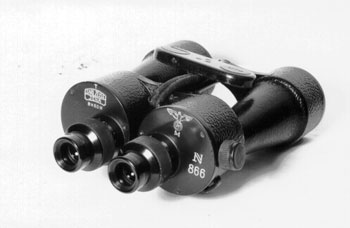 Zeiss
made more variants of prism binoculars than any other firm. At first brass
and heavy alloys were used to for the body of the binocular but over the
time between 1905 and 1935, new improvement came to these glasses. Aluminum
became stronger and less expensive. New oculars were computed and the quality
of the glass available became better and better. In 1934, Dr. Smakula perfected
the first lens coating process and they were soon incorporated into German
military equipment. This pair of 8 x 60 H were a gigantic leap forward in
design and coating. These were made before 1941 and were not available for
civilian use. The light passage and the coating made this the best glass
of their day and would challenge even the best binoculars of today. This
was an example of the Nazi governments commitment to the best materials
regardless of cost.
Zeiss
made more variants of prism binoculars than any other firm. At first brass
and heavy alloys were used to for the body of the binocular but over the
time between 1905 and 1935, new improvement came to these glasses. Aluminum
became stronger and less expensive. New oculars were computed and the quality
of the glass available became better and better. In 1934, Dr. Smakula perfected
the first lens coating process and they were soon incorporated into German
military equipment. This pair of 8 x 60 H were a gigantic leap forward in
design and coating. These were made before 1941 and were not available for
civilian use. The light passage and the coating made this the best glass
of their day and would challenge even the best binoculars of today. This
was an example of the Nazi governments commitment to the best materials
regardless of cost.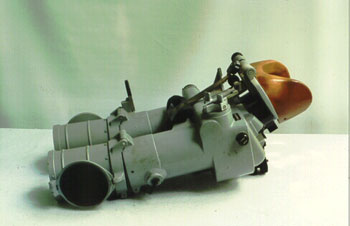 Additional
examples of cost was no barrier to the product are these pair of special
military binoculars. These were mounted on wide base rangefinder to seek
out targets of various types from shore batteries, antiaircraft positions
or artillery targeting sites. Special eye rests for long viewing periods
and special long lens shades and protective devices were standard on these
military issue. Many lessons were learned for postwar civilian products
but most were claimed by Allied souvenir hunters and their like would never
be produced again. Many special devices were added to these in case of gas
attack, moisture prevention, cold and heat resistant solvents. These were
usually marked with special military source codes instead of the name of
the manufacturer. This was to lower the possibility of the manufacturer
being targeted for bombing runs to lower manufacture and distribution to
the military.
Additional
examples of cost was no barrier to the product are these pair of special
military binoculars. These were mounted on wide base rangefinder to seek
out targets of various types from shore batteries, antiaircraft positions
or artillery targeting sites. Special eye rests for long viewing periods
and special long lens shades and protective devices were standard on these
military issue. Many lessons were learned for postwar civilian products
but most were claimed by Allied souvenir hunters and their like would never
be produced again. Many special devices were added to these in case of gas
attack, moisture prevention, cold and heat resistant solvents. These were
usually marked with special military source codes instead of the name of
the manufacturer. This was to lower the possibility of the manufacturer
being targeted for bombing runs to lower manufacture and distribution to
the military.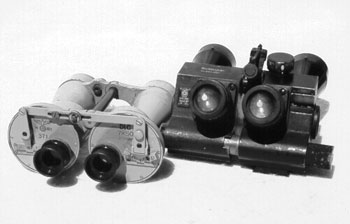 With
all of the diverse uses of what was labeled optical munitions, the housing
and the design was an especially major concern. These were to be mounted
in various ships, bunkers, observation towers and equipment stanchions.
Both of these binoculars are the same design but in radically different
housing. These are both the same design as the rare prewar Septarem model
and were the standard binocular issued to the U-boats in wooden cases
containing 10 or more of the same model.
With
all of the diverse uses of what was labeled optical munitions, the housing
and the design was an especially major concern. These were to be mounted
in various ships, bunkers, observation towers and equipment stanchions.
Both of these binoculars are the same design but in radically different
housing. These are both the same design as the rare prewar Septarem model
and were the standard binocular issued to the U-boats in wooden cases
containing 10 or more of the same model.